
A lawyer in Hong Kong vibe coded a working version of Harvery and Legora's tabular review feature.
It took him an afternoon.
He also built a Spellbook alternative using Google AI Studio and Gemini.
Jamie Tso joined me on the Legal Innovation Spotlight this week to talk about what this means for legal tech.
Here's the uncomfortable question we explored:
If a non-engineer lawyer can replicate core features of $1B+ legal AI companies in a few hours, where's the moat?
Jamie's take is nuanced.
The frontier models are doing the heavy lifting.
The embedding models and enterprise infrastructure matter.
But the UI layer that many legal AI vendors lean on?
That's getting commoditized fast.
The more interesting insight was about innovation teams.
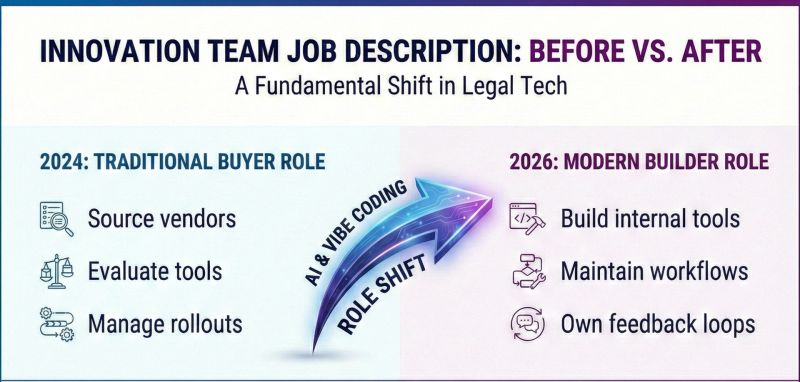
The innovation role may shift from sourcing and evaluating vendors to building and maintaining vibe coded tools themselves.
Because by the time procurement cycles finish, the lawyer's pain point may have already passed.
The line between technical and non-technical is getting blurry.
AI is the great equalizer.
First published on LinkedIn. Read the thread and replies.
Ted Theodoropoulos is CEO and co-founder of Infodash and hosts the Legal Innovation Spotlight podcast. He writes about legal AI strategy, law firm technology, and the economics of the law firm business model.