
Nobody reads the privacy policy.
You know it. I know it. The companies writing them know it.
That's why they bury things in there.
GameStation once hid a clause granting them ownership of customers' souls. 7,500 people agreed. (seriously...see link below)
Google quietly changed Gemini's defaults so it could access your private emails and chats without you lifting a finger.
Meta started using your AI chat data for ad targeting last December.
The opt out? There isn't one.
These aren't hypotheticals. They already happened.
Here's what changed for me.
I opened a privacy policy for my home scanner and used Wispr Flow to speak this prompt in < 30 seconds into in Claude's side panel in my browser:
"What in this privacy policy should I be concerned about? Rate each issue and list them in descending order of risk. Exclude low risk issues."
I got back a risk ranked list I could scan in under a minute.
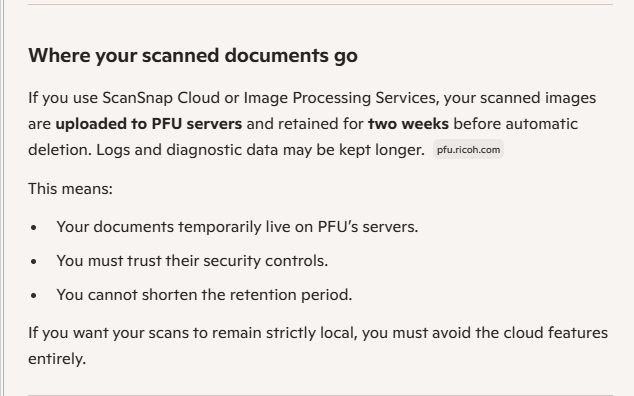
And I found out that the Ricoh can store the things I scan in places I was completely unaware of and for time horizons I'm not comfortable with.
Tax returns, bank statements, medical records, etc. all living on some servers for two weeks before they're deleted?!?!?
It took me 60 second to figure that out.
Pre-AI this document would have never been read like every other one before it.
Now every EULA update, every privacy policy change, every terms of service revision can get a 60 second risk check.
I will be disabling all cloud features on this scanner.
The tools exist. The friction is gone.
What's your excuse for not reading the fine print now?
First published on LinkedIn. Read the thread and replies.
Ted Theodoropoulos is CEO and co-founder of Infodash and hosts the Legal Innovation Spotlight podcast. He writes about legal AI strategy, law firm technology, and the economics of the law firm business model.