
Harvey pays its legal engineers up to $320K.
Big Law is paying the people building its actual AI systems less than that.
Josh Kubicki pulled three legal engineer job specs this month. Kirkland, Norm AI, Harvey. One title family, three seemingly different jobs. His read: a builder, a translator, and a seller.
Josh's article: Josh's article
These reqs are all over the place because most firms haven't named the need. So let's trace the need backwards.
In June, Deloitte surveyed over 100 in-house legal teams. Their message was clear. Law firms aren't engaging them on how AI will change the cost and quality of their service.
Why the silence? Because an honest answer leads straight to pricing.
And pricing is the scariest conversation inside a law firm.
Move away from the billable hour and you touch everything built on top of it. Compensation. The partner track. The KPIs the firm measures itself against. The actual identity of a lawyer.
That is deep human work, and it is daunting.
So firms do the logical first thing instead.
They bolt AI onto workflows that have barely changed in 20 years.
That gets you incremental efficiency gains inside the old model. It does not get you to value-based pricing.
Fixed fee requires fixed scope.
Fixed scope requires re-engineered work from first principles.
And most firms aren't staffed to re-engineer work.
There have been pockets of real process engineering in Big Law for years. They've largely stayed pockets.
If I were retooling my org to align to the needs of this AI transformation I would think about how to incorporate formal process engineering discipline.
Lean Six Sigma exists for exactly this problem. Lean attacks waste, which is cost. Six Sigma attacks defects, which is quality.
Cost and quality. The two things clients just told Deloitte their firms aren't talking to them about.
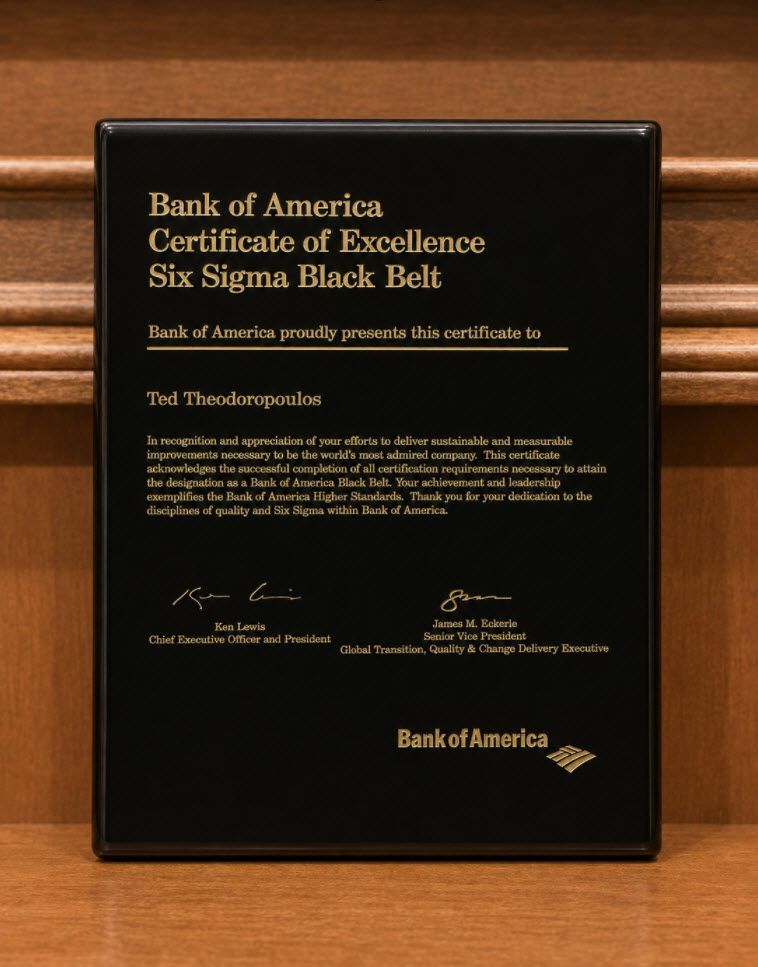
I've held a Lean Six Sigma black belt for over 20 years and have personally rebuilt legal workflows with these methods WAY before it was cool (see below).
Ron Friedmann Law Factory case study: Ron Friedmann Law Factory case study
The work is unglamorous. The results are not.
So here's my question. How many firms are focusing on rebuilding the org structure around real process engineering capabilities?
Your process engineers do NOT need to be JDs. You have plenty of JDs to pair them with.
Outside of the AI native space, it feels like we're less focused on the process than we are on the tech.
First published on LinkedIn. Read the thread and replies.
Ted Theodoropoulos is CEO and co-founder of Infodash and hosts the Legal Innovation Spotlight podcast. He writes about legal AI strategy, law firm technology, and the economics of the law firm business model.